Three motorcycles,
one engine
From 1971 to 1974 Ducati built its first V-twin with round covers over the bevel drive. Three models share that engine: the 750 GT, the 750 Sport and the 750 Super Sport.
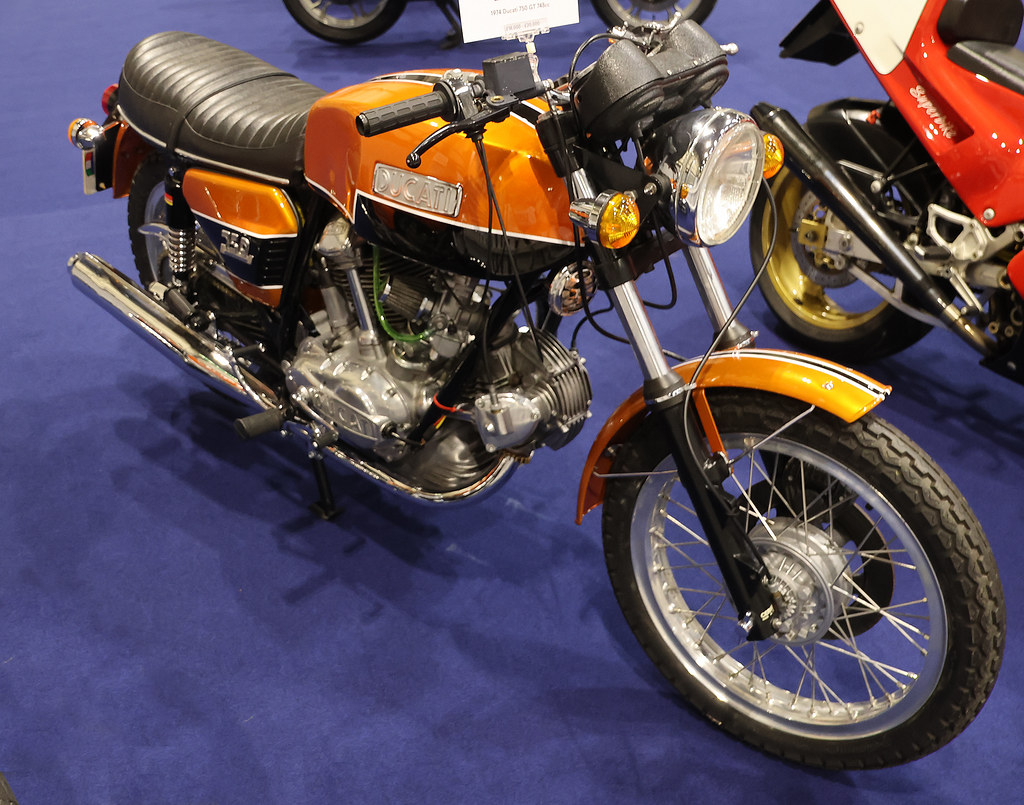
The touring 750: the first of the line, upright and long-legged.
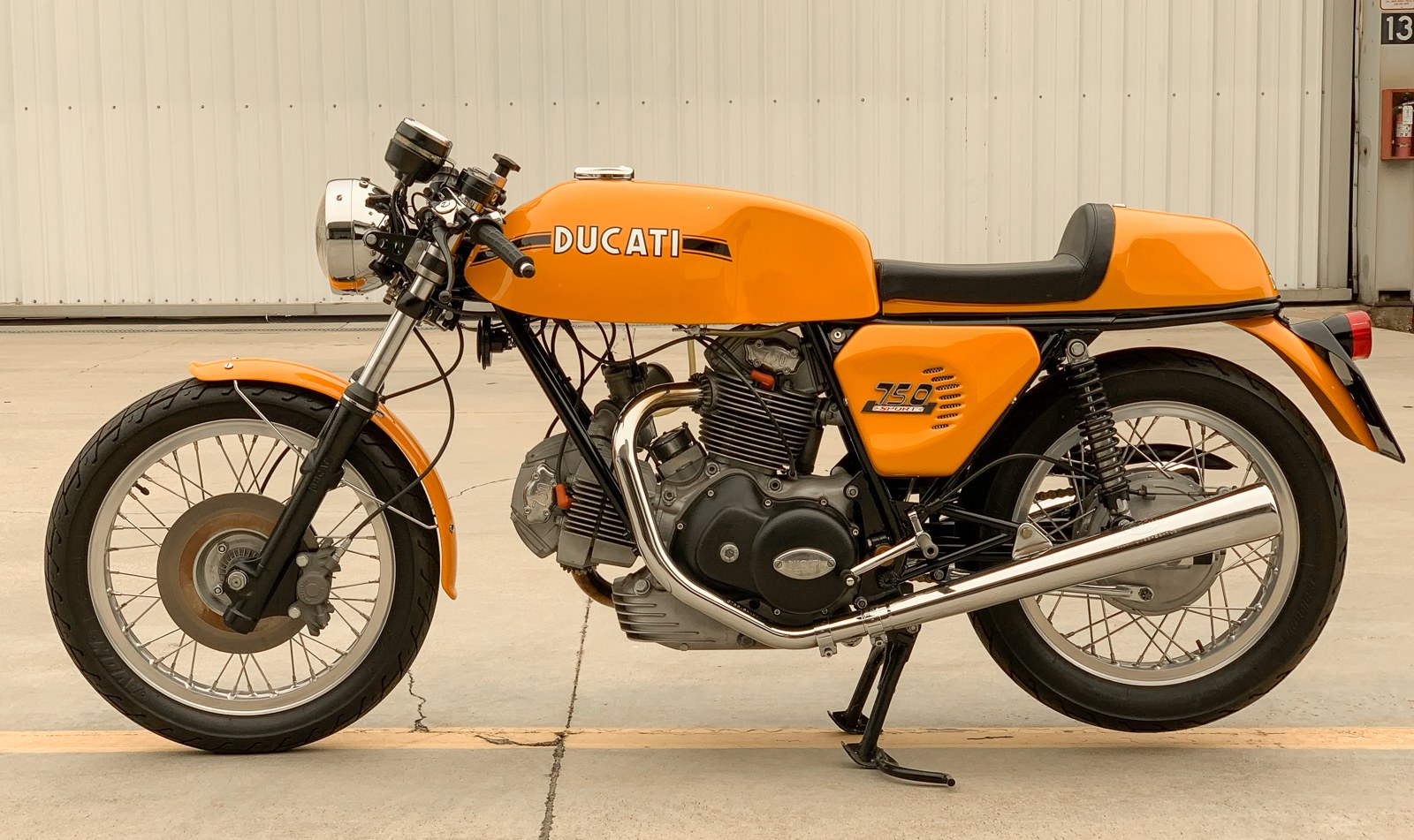
The same engine in a lower, leaner motorcycle with clip-ons and a single seat.
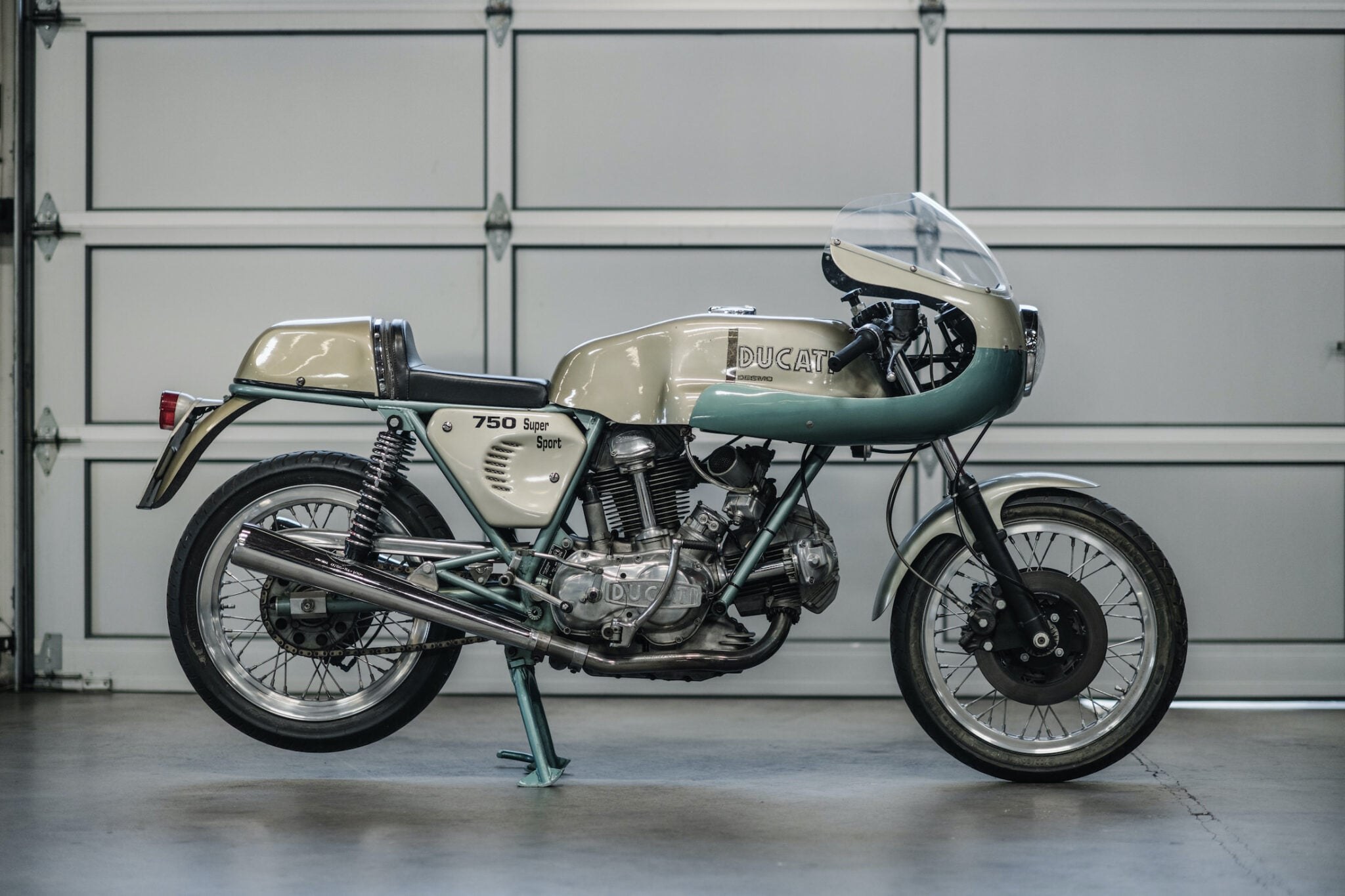
The road version of the Imola racer, with desmodromic valves and a half fairing.
Fabio Taglioni
Fabio Taglioni was born in September 1920, on the 10th or the 20th.
Taglioni was born in Lugo di Romagna, at San Lorenzo di Lugo.
Taglioni graduated in mechanical engineering in 1943.
After the war Taglioni worked for Ceccato and then for Mondial from 1950 to 1954.
Taglioni joined Ducati as Technical Director on 1 May 1954.
Taglioni worked for Ducati from 1954 until 1984 or 1989.
Taglioni had around 1,000 engine designs to his name.
Taglioni created the Ducati 125 Desmo, the first Ducati with desmodromic valve gear, which won its first Grand Prix a month after its debut.
Taglioni died in Bologna on 18 July 2001.
Taglioni considered the 750 engine his best design.
Taglioni chose the 90-degree layout for good primary balance and a narrow engine.
Imola, 1972
On 23 April 1972 Paul Smart won the Imola 200 on a Ducati 750 and Bruno Spaggiari finished second.
Ducati took seven or eight 750s to Imola; Taglioni had planned ten, and no build records were kept.
Ducati's riders for Imola were Paul Smart, Bruno Spaggiari, Ermanno Giuliano and Alan Dunscombe.
Paul Smart joined the team late, after a Triumph ride fell through, and rode bike number 16.
Smart won on his 29th birthday at a race average of 97.8 mph.
The 1972 Imola 200 offered record prize money of 35 million lire.
Agostini's MV retired; Spaggiari led late in the race but Smart retook the lead two laps from the end when Spaggiari ran wide at Acque Minerali.
The Imola bikes used production frames, modified (narrowed) for racing.
The Imola bikes used 40 mm Dell'Orto racing carburettors with accelerator pumps.
The Imola bikes had twin front discs and a single 230 mm rear disc, using left-side Lockheed calipers.
The Imola engines made 80 to 86 hp at 8,500 to 9,200 rpm; the bikes weighed about 176 kg dry.
Smart received his Imola bike as a bonus for winning.
Taglioni said that by winning Imola Ducati also won the market.
The round case years
Taglioni began work on the 750 project in March 1970.
Taglioni completed the 750 design in under two months, and the first engine ran on the test bed within a further two months.
Taglioni's new V-twin engine began testing in July 1970.
A road-going prototype existed by August 1970, the first of four development prototypes.
The 750 was first shown at the Milan Show in November 1970, and to the public at the Olympia Show in London in January 1971.
In February 1971 a frame built by Colin Seeley in England was sent to Ducati.
750 GT production began in June or July 1971.
The 750 GT sold slowly until Paul Smart won the Imola 200 in April 1972.
The final form of the 750 Sport was settled by October 1972.
The 750 Sport appeared in late 1972, still with a valve spring engine.
The desmodromic 750 Super Sport followed the Sport in 1973 and 1974.
An electric starter came with the last 1974 750 GTs; only a few GTs had one.
750 Sport production ended in September 1974; the 860 series replaced the 750s in the second half of that year.
The 860 GT, styled by Giorgetto Giugiaro, was produced in 1974 and 1975 and used the engine and frame layout of Taglioni's 750 GT.
US rules from September 1974 required a left-side gearchange, a final blow to the 750.
A 1975 version of the 750 SS used the square-case engine; collectors prefer the earlier round-case bikes.