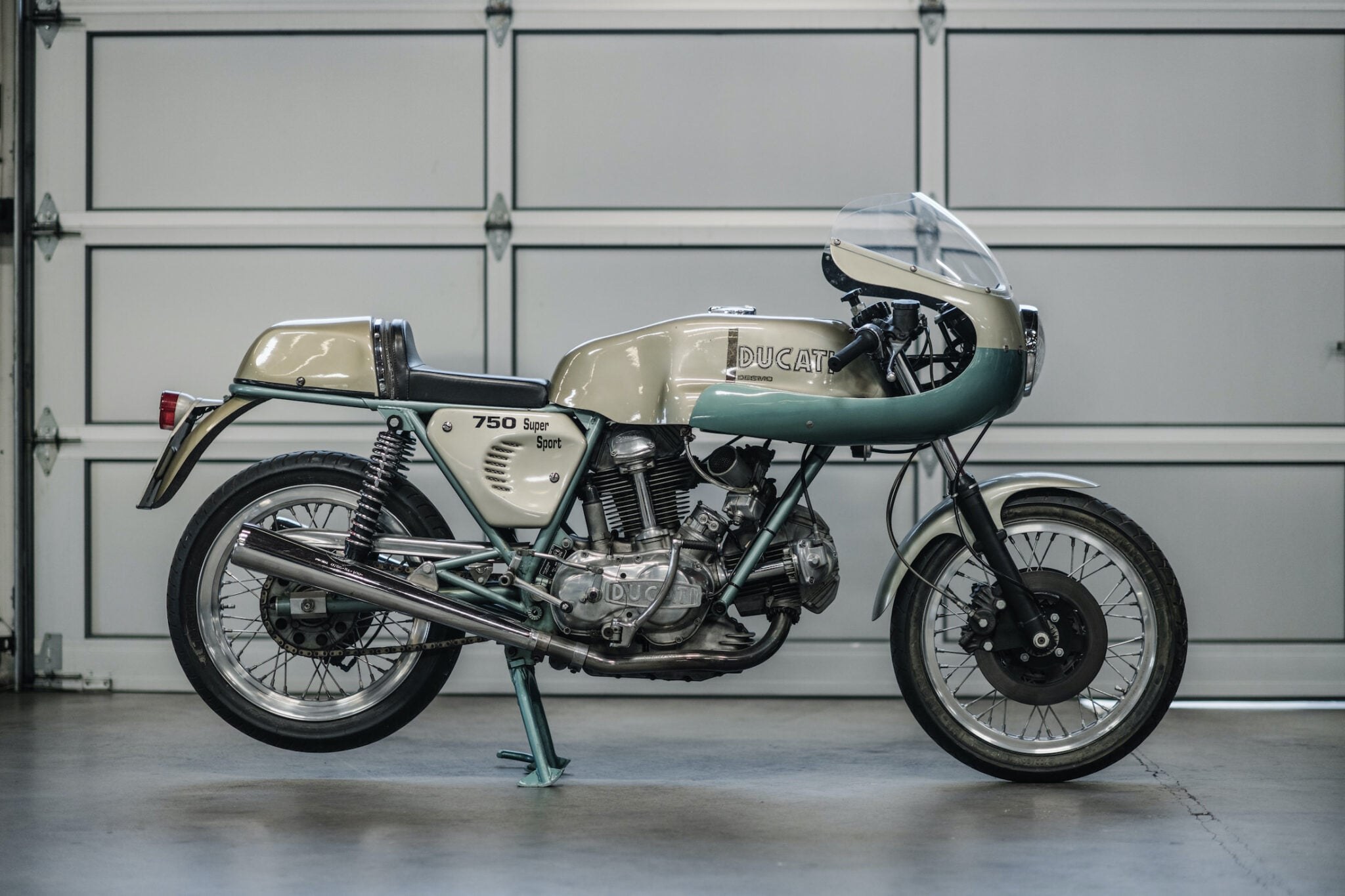
750 Super Sport
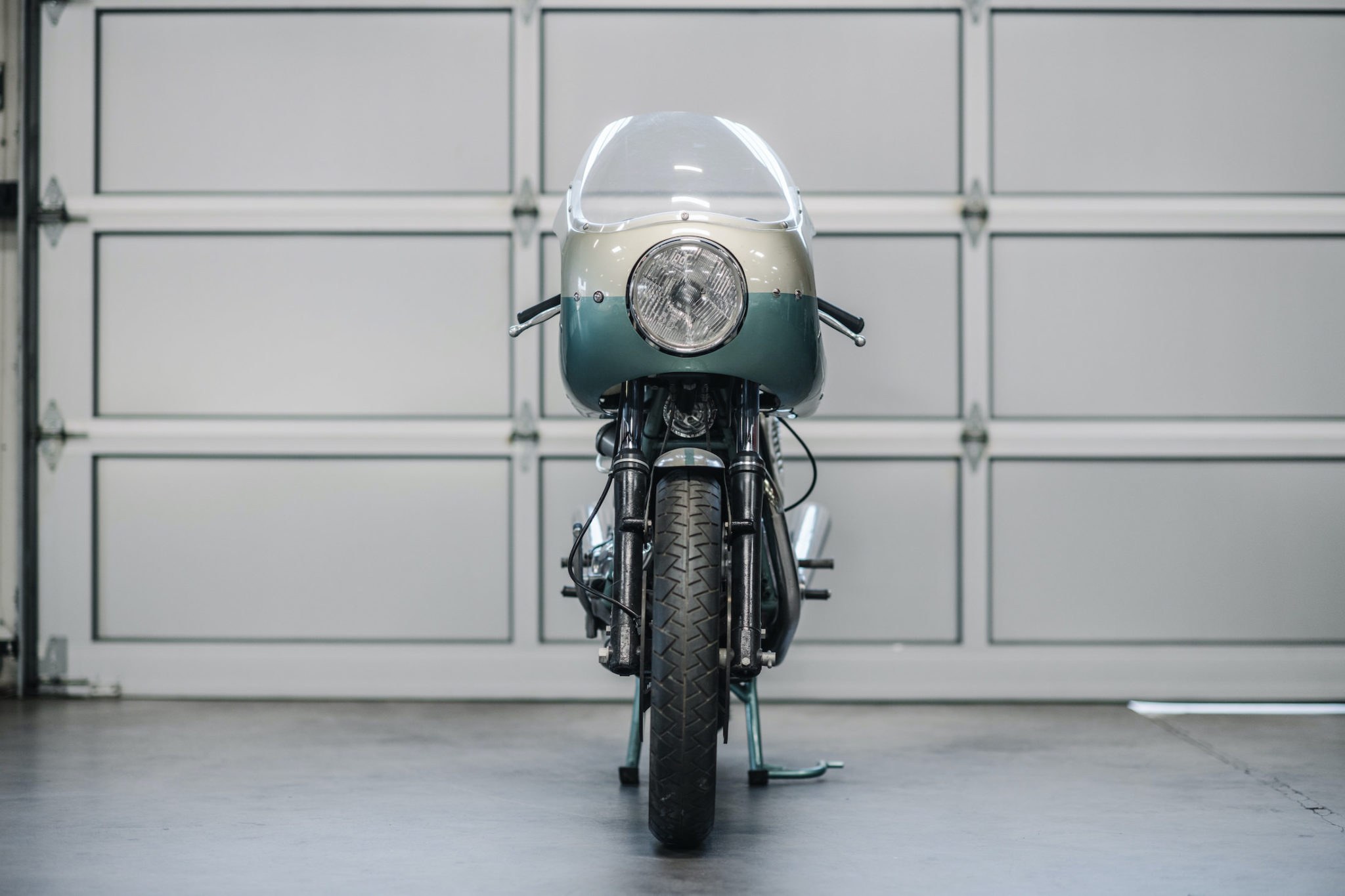
The road version of the Imola racer, with desmodromic valves and a half fairing.
401 round-case 750 Super Sports were built; one former owner recalls 200.
Only 88 round-case 750 SS were sent to the United States.
Super Sport production ran from late 1973, or from January 1974, into 1974.
- Engine
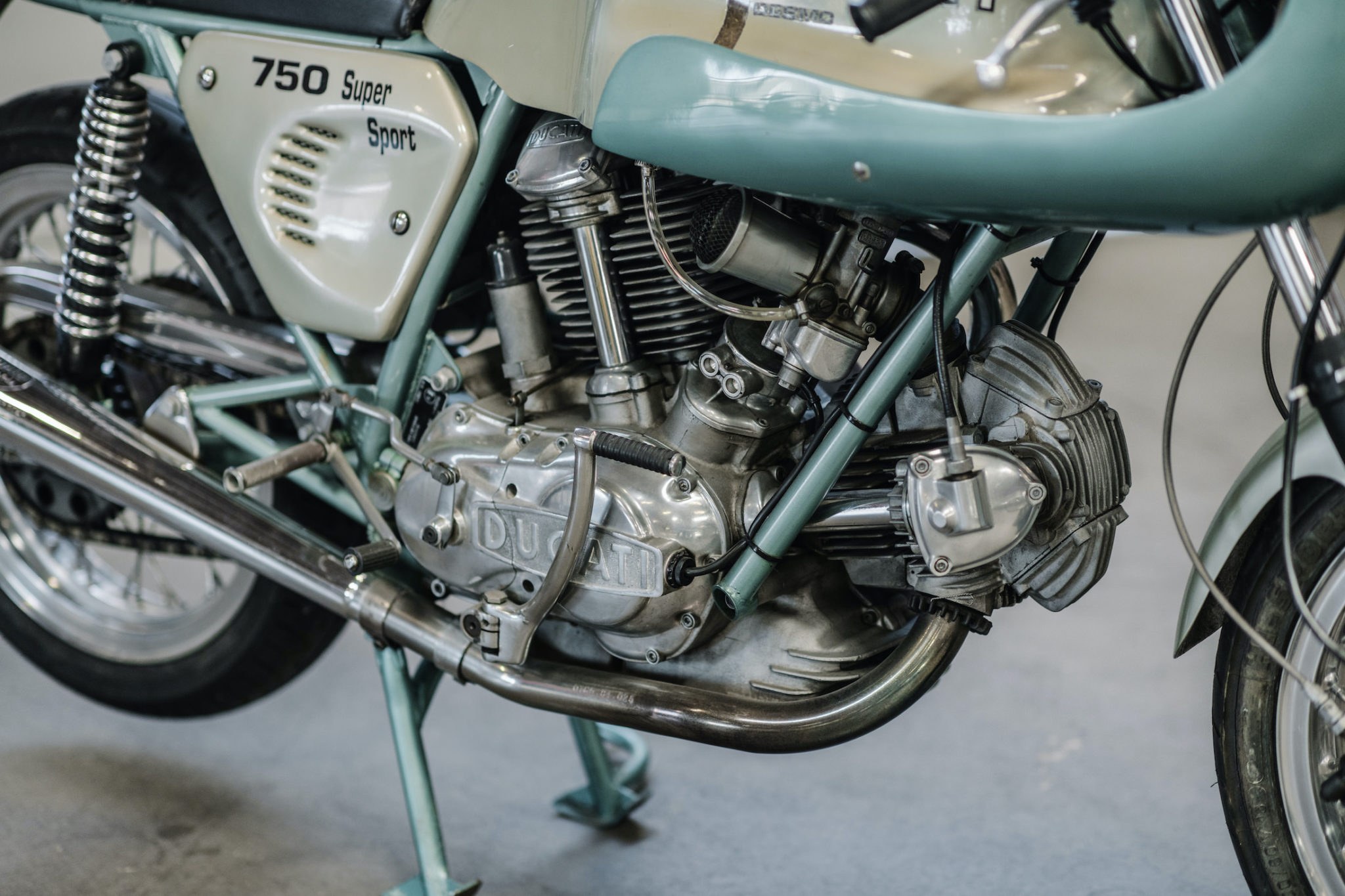
- 748 cc desmodromic 90° V-twin
- Compression
- 9.5 to 10.5 : 1
- Carburettors
- Dell'Orto PHM 40A
- Power
- 70 to 72 hp
- Dry weight
- 151 kg
- Top speed
- 209 to 225 km/h
- Front brakes
- Twin 275 mm discs
- Built
- 401
Frame, brakes and wheels
- The 750 SS had a centre-axle Marzocchi fork and 18-inch Borrani wheels.
Colours and finish
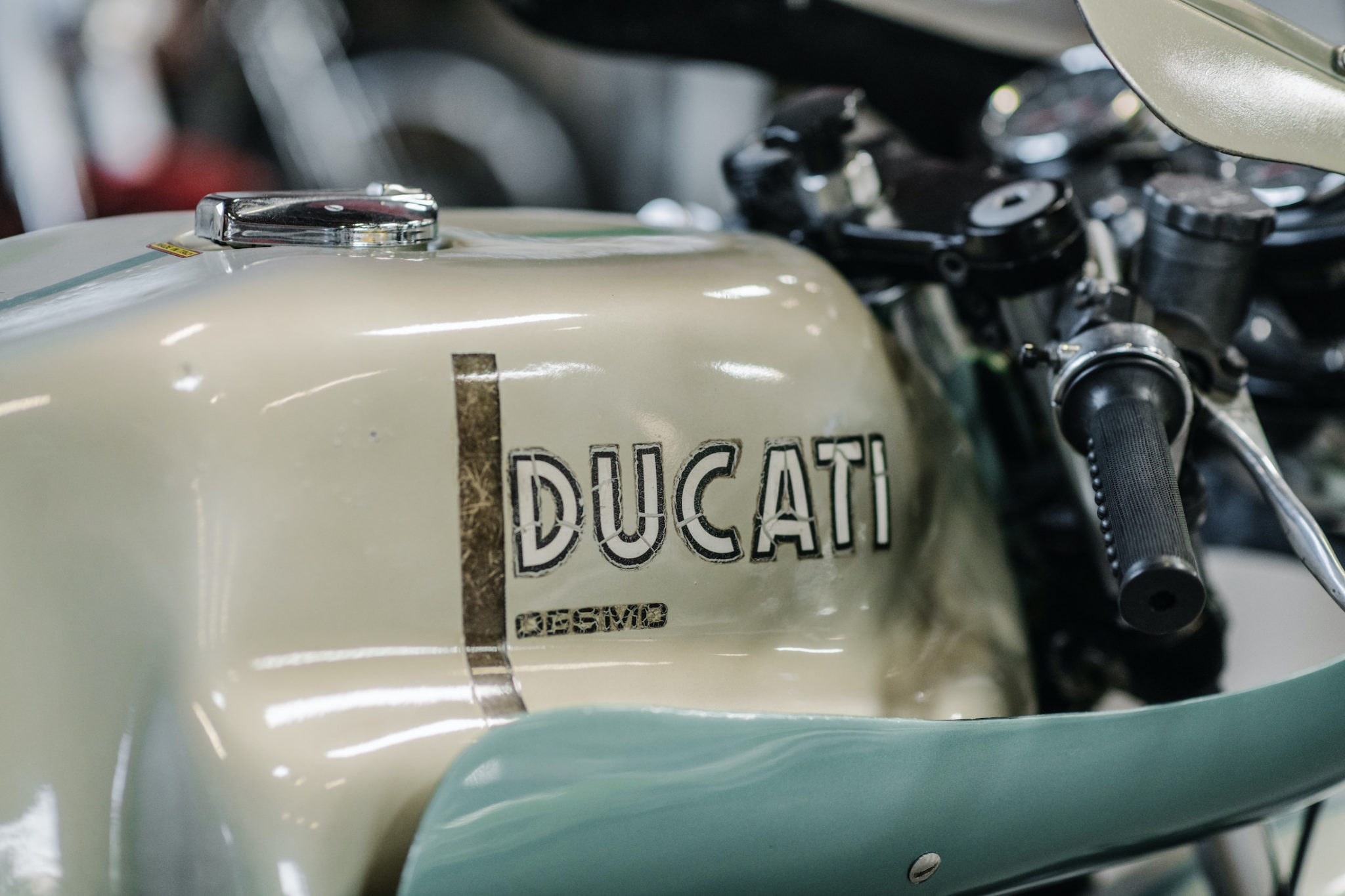
- The 750 SS frame was painted a blue that looks closer to green, which gave the 'green frame' nickname; paint shades varied between components.
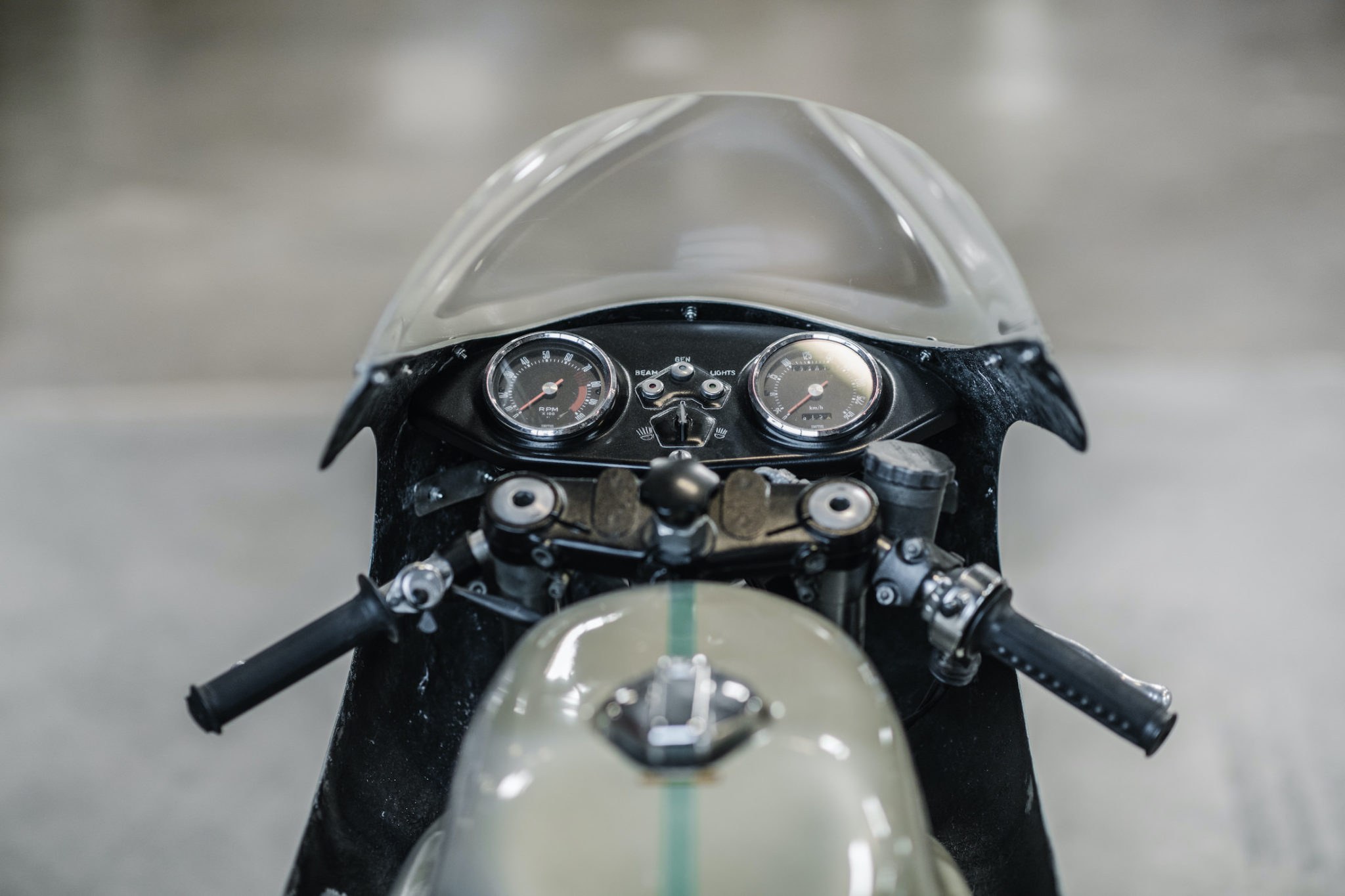
- The 750 SS had silver fibreglass bodywork, a fibreglass tank with a translucent strip showing the fuel level, a half fairing and a single seat.
Versions and markets
- Most 750 SS went to the US, followed by Australia and the UK.
Tell them apart
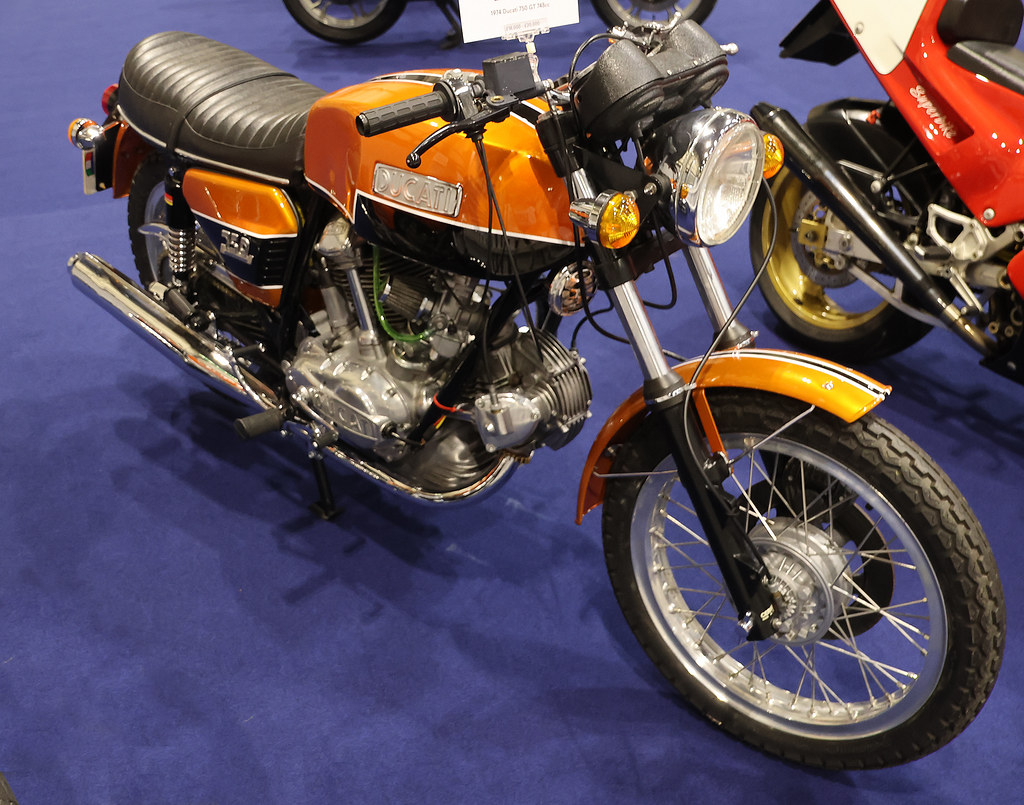 | 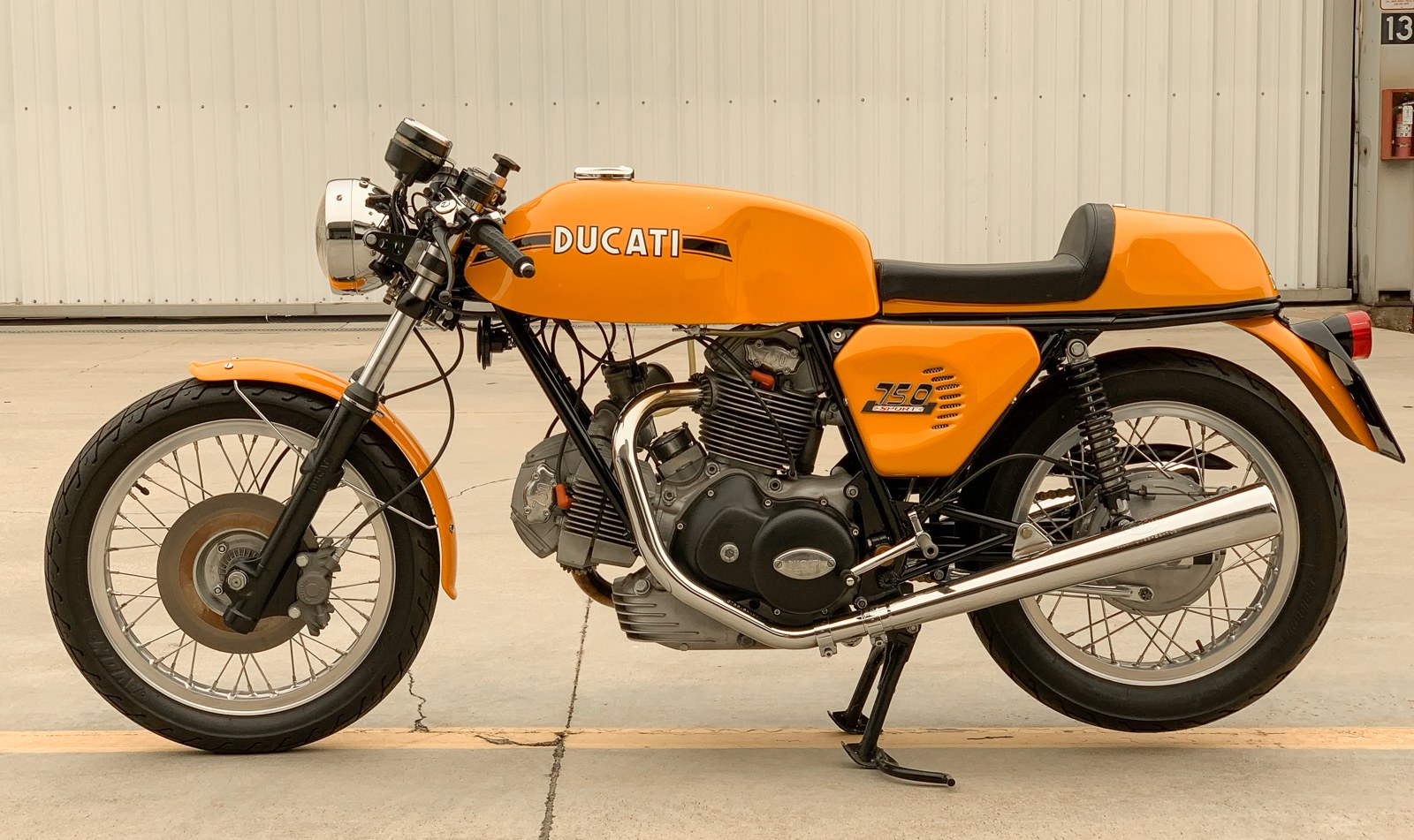 | | |
|---|---|---|---|
| Valves | Coil springs | Coil springs | Desmodromic |
| Carburettors | 30 mm Amal, later Dell'Orto | 32 mm Dell'Orto | 40 mm Dell'Orto |
| Power | 50 to 65 hp | 62 hp | 70 to 72 hp |
| Dry weight | 185 to 193 kg | 182 to 185 kg | 151 kg |
| Top speed | 190 to 200 km/h | about 210 km/h | 209 to 225 km/h |
| Riding position | Handlebars, higher on US bikes | Clip-ons, rear-sets, single seat | Half fairing, single seat |
| Front brake | Single disc | Single disc | Twin discs |
| Look | Metallic colours, silver then black frame | Yellow with black, black frame | Silver fibreglass, green frame |
| Built | 4,093 to 4,133 | 1,602 to 1,625 | 401 |
From Bologna to Imola
From the first drawings to the square-case engines.
Taglioni began work on the 750 project in March 1970.
Taglioni completed the 750 design in under two months, and the first engine ran on the test bed within a further two months.
Taglioni's new V-twin engine began testing in July 1970.
A road-going prototype existed by August 1970, the first of four development prototypes.
The 750 was first shown at the Milan Show in November 1970, and to the public at the Olympia Show in London in January 1971.
In February 1971 a frame built by Colin Seeley in England was sent to Ducati.
750 GT production began in June or July 1971.
The 750 GT sold slowly until Paul Smart won the Imola 200 in April 1972.
The final form of the 750 Sport was settled by October 1972.
The 750 Sport appeared in late 1972, still with a valve spring engine.
The desmodromic 750 Super Sport followed the Sport in 1973 and 1974.
An electric starter came with the last 1974 750 GTs; only a few GTs had one.
750 Sport production ended in September 1974; the 860 series replaced the 750s in the second half of that year.
The 860 GT, styled by Giorgetto Giugiaro, was produced in 1974 and 1975 and used the engine and frame layout of Taglioni's 750 GT.
US rules from September 1974 required a left-side gearchange, a final blow to the 750.
A 1975 version of the 750 SS used the square-case engine; collectors prefer the earlier round-case bikes.
Before you buy
What to look for in a round case. Have any motorcycle checked by a specialist before you buy.
Unlike the GT and Sport, the 750 SS frame number is stamped on the left side between the rear engine mounts, with its own number sequence.
Ian Falloon keeps a registry of round-case 750 SS, used by auction houses to check individual motorcycles.
It is difficult to find a 750 SS in essentially complete and unmolested condition.
Period new prices: 750 GT AUD 1,599 in Australia (1972), 750 Sport USD 2,700 (1972), 750 SS about USD 3,200.
Round-case 750 SS values run from about USD 80,000 to over 200,000 for the best; RM Sotheby's sold one for USD 174,000 in 2020.